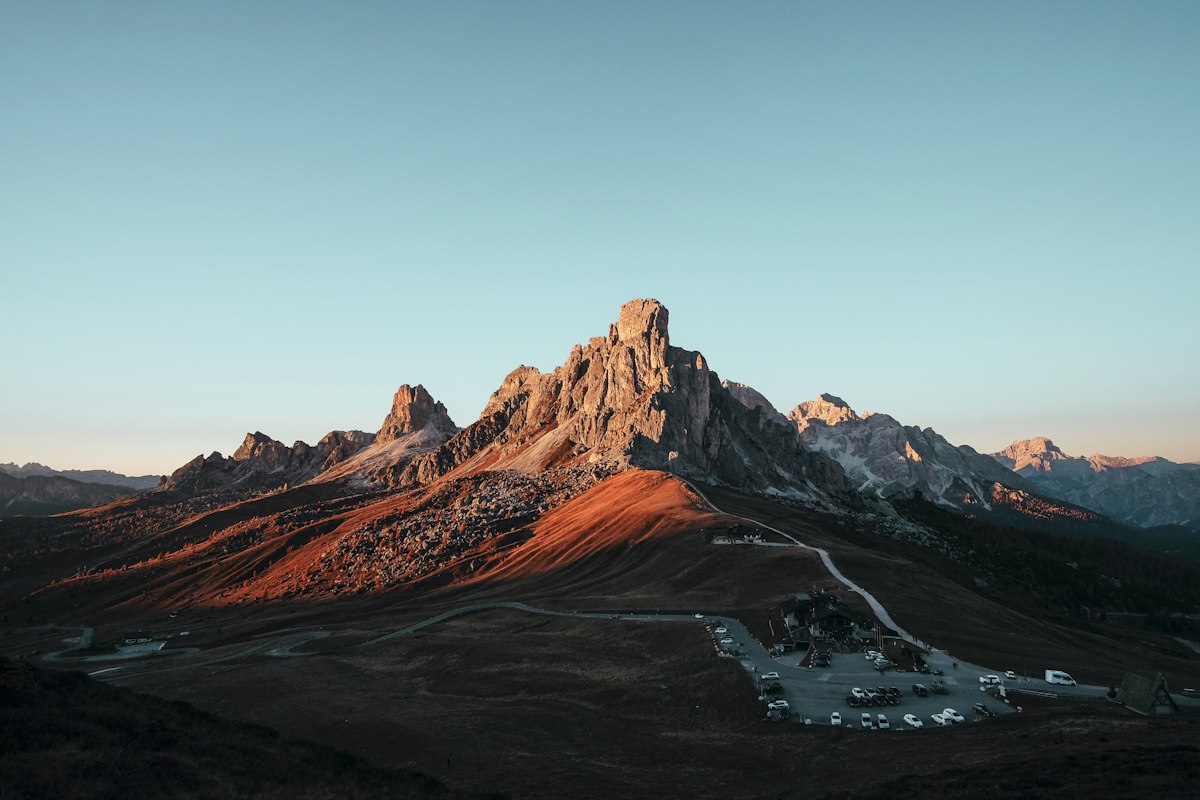
The mountains impose their own visual grammar. Unlike a lowland landscape, scale quickly becomes illegible here without a point of reference: a 3,000-metre peak photographed alone, with no foreground element, loses all its majesty on a phone screen. Understanding how to compose with this particular terrain turns a holiday snapshot into an image that truly captures the lived experience.
Light, the Mountain Photographer's Best Ally
The golden hours — the first hour after sunrise and the last before sunset — offer raking light that sculpts relief and warms mineral tones. At midday, vertical light flattens volumes and hardens contrasts: it's a time to favour wide shots, or simply put the camera away to enjoy the landscape.
Fog and low cloud, often seen as constraints, are in fact powerful allies: they create depth, isolate a subject, and avoid the flatness of a uniform blue sky across every trek photo you take.
"The best mountain photo is never the whole summit. It's the detail that tells the story of the climb."
Composing with What the Terrain Offers
Systematically place a scale element in the frame — a hiker, a tent, a cairn — to give a real sense of the landscape's immensity. Use the terrain's natural lines (ridges, trails, streams) to guide the eye toward your main subject rather than letting it get lost in an overloaded frame.
Finally, resist the urge to photograph everything. The best mountain photographer also knows when to put the camera down and fully live the moment — because an image, however successful, will never replace the memory of having truly been there, facing the landscape.
Gear: Favour Simplicity
A recent smartphone is more than enough for most situations, with the decisive advantage of staying constantly accessible — unlike a camera buried at the bottom of a bag the exact moment the light turns perfect. For those wanting to go further, a lightweight hybrid camera with a single versatile lens (24-70mm equivalent) avoids the temptation to swap lenses mid-ascent, in wind and cold.
Systematically protect your gear from moisture and impact: a simple dedicated dry pouch, slipped into an accessible pocket of your pack, is enough to avoid a failure at the worst possible moment. Cold also drastically reduces battery life — always keep a spare against your body, under an insulating layer, to keep it warm.
Planning Your Outing Before You Even Leave
Sun-position simulation apps, which show the exact position of the sun at a given time and place, let you anticipate the direction of raking light on a specific summit before you've even set foot on the trail. This upfront preparation often makes the difference between a photo that catches the light at the right moment and one taken thirty minutes too late.
"You don't find the right light by chance. You wait for it, in the spot where you know it will pass."
Scouting a viewpoint the day before, in broad daylight, also lets you assess the safety of the approach before venturing there in the dim light of sunrise — because no photo is ever worth the risk of a fall on poorly identified terrain.
Photographing Other Hikers Respectfully
Asking permission before photographing a hiker crossed on the trail remains an obvious courtesy too often forgotten once the subject seems picturesque. This simple politeness extends to refuges and bivouacs, where the privacy of a meal break or of sleep deserves the same respect as in any other shared space.
Sharing photos online carries an added responsibility: precisely geotagging a fragile or little-visited site can trigger a sudden influx the place isn't prepared to absorb, along with the degradation that inevitably follows. Favouring an approximate location, at the scale of the range rather than the exact summit, reconciles sharing with preservation.