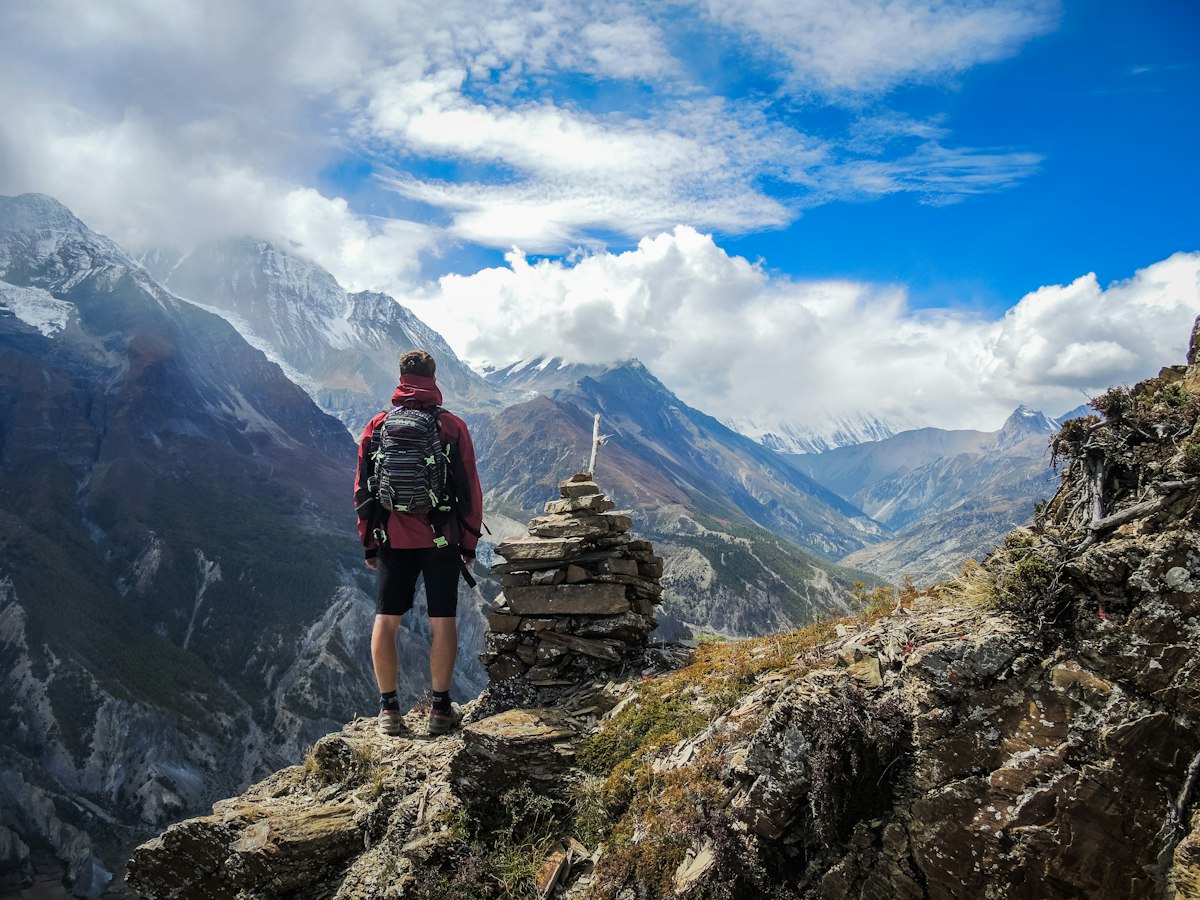
Two hikers can carry exactly the same gear and have a radically different experience depending on how they packed it. A poorly organised pack tires you out faster, throws off your balance, and turns every break into a frustrating rummage for something buried at the bottom. Organisation isn't a minor detail — it's a skill in its own right.
The Logic of Three Zones
The bottom of the pack holds what you'll only need at camp or at the refuge: sleeping bag, spare clothes, warm down jacket. This zone can be compressed freely since it will only be opened at the end of the day. The core of the pack, in the middle, houses the heaviest items — food, stove, tent — positioned as close to your back as possible to keep your centre of gravity near your spine. Finally, the top and accessible pockets gather everything that needs to stay within immediate reach: rain jacket, map, snacks, first-aid kit.
"A well-packed bag reveals itself in how quickly its owner finds what they're looking for without emptying it entirely."
Protect Before You Pack
Water remains enemy number one for your pack's contents, even with a rain cover. Systematically use internal dry bags to isolate your sleeping bag and dry clothes — an external cover protects against driving rain, but rarely against a fall into a stream or prolonged ambient humidity.
Weight distribution deserves a final word: even a slight left-right imbalance translates, over hours of walking, into asymmetric muscular tension. Get in the habit of checking your pack's balance before setting off, by lifting it by the top handle: it shouldn't tip left, right, or backward.
Adapting Your Packing to the Day's Conditions
The day's weather should dictate the accessibility of certain items more than their weight or bulk. Under a threatening sky, the rain jacket has no business buried under the sleeping bag: it needs to be reachable in under ten seconds, without unpacking everything on the trail. Conversely, in stable fair weather, that same jacket can move back down to free up useful space in the top pocket.
Clothes worn at the start of the day but likely to come off once you've warmed up — a fleece, a beanie — deserve a dedicated outer pocket rather than deep storage: taking them off should never require setting the pack down.
Mistakes That Needlessly Complicate the Walk
Multiplying small storage pouches looks organised on paper, but every extra pouch is one more layer of searching when you need to find a specific item. Two to three pouches per logical category (hygiene, electronics, food) are more than enough — beyond that, the organisation itself becomes a source of wasted time.
"An over-compartmentalised pack ends up hiding what it was meant to organise."
Finally, neglecting to compress the contents lets the load settle and shift with every step, creating friction points against the back over time. A few minutes of methodical compression at the start avoid hours of accumulated discomfort on the trail.
The Special Case of Day Hikes
A day-hiking pack, smaller and therefore more constrained in volume, demands even stricter prioritising: water and food take up most of the available space, leaving little room for the superfluous. Resist the temptation to bring "just in case" gear that adds weight without real use on an outing of a few hours.
The first-aid kit and waterproof layer, however, remain non-negotiable regardless of planned duration — weather changes faster than expected, and a poorly prepared day hike sometimes turns into the longest night of the year.