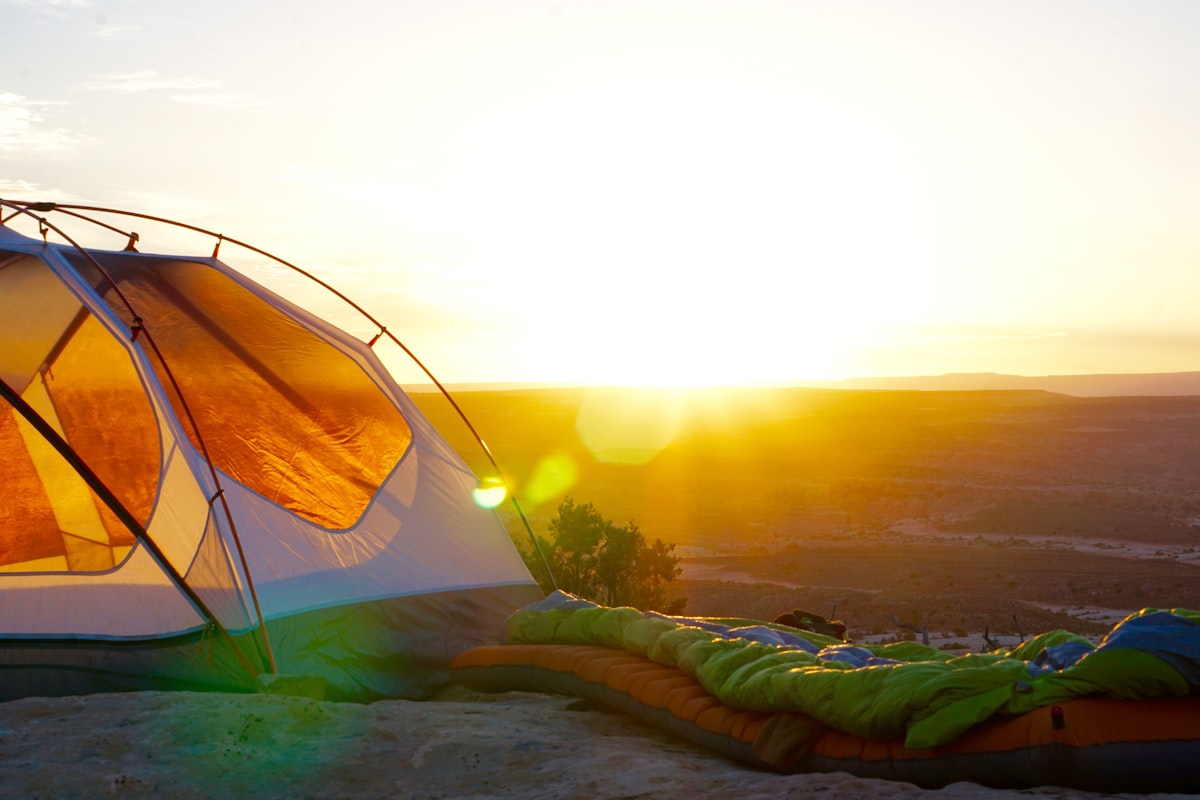
Wild camping occupies a grey area in French law, distinct both from official camping on developed grounds and from bivouacking, which is more tolerated. Understanding this distinction avoids plenty of unpleasant surprises, from a potential fine to a simple warning from a forest ranger.
What the Law Actually Says
Wild camping — pitching a tent for several nights in the same spot — remains banned across most of French territory, particularly in areas classified as protected sites, nature reserves, or national park cores. Bivouacking, a single night pitched at sunset and taken down at sunrise, generally enjoys accepted tolerance between 7pm and 9am in most mountain ranges, provided you stay a reasonable distance from roads, water points and inhabited areas.
Each national or regional park has its own regulations, however, sometimes stricter: checking local rules before setting off remains the only reliable way to avoid an offence committed in good faith.
The Good Practices That Make a Difference
Setting up late and leaving early limits a night's visual and environmental impact, while reducing the risk of disturbing nocturnal wildlife that's particularly active at dusk and dawn. Choosing a spot already bare of vegetation rather than an intact meadow avoids worsening erosion on ground not meant to withstand repeated trampling.
"The best bivouac is the one nobody can tell, the next day, ever took place."
Proximity to Water, a Particular Point of Caution
Camping at least 50 metres from any spring or watercourse protects downstream water quality and respects the corridors wildlife uses to drink, particularly at dawn and dusk. That distance also limits the real, though often overlooked, risk of a sudden nighttime flood on ground that seemed dry when you pitched the tent.
Checking Ahead, a Habit Worth Building
Local tourist offices and regional nature park websites generally publish precise maps of permitted zones, worth checking systematically before heading into an unfamiliar range. This upfront check, which rarely takes more than ten minutes, avoids both a potential penalty and an environmental impact that unfamiliarity with the terrain could otherwise have unwittingly worsened.
The Special Case of Open Fires in the Wild
Lighting a fire outside explicitly permitted zones exposes you to penalties far more severe than a simple poorly placed night's bivouac, and the wildfire risk it creates is disproportionate to the real benefit it provides. A gas stove covers the same cooking needs without leaving any trace or posing any risk, even in prolonged dry conditions.
During a declared drought, some French départements ban open flames outright, including flame-based stoves, in favour of electric or strictly controlled gas stoves only — information worth systematically checking with the relevant prefecture before setting off in a high-risk summer period.
Collective Responsibility in the Face of Overcrowding
The rise of wild bivouacs at certain sites made popular through social media creates a cumulative pressure the natural environment can no longer absorb without visible damage. A spot hosting one isolated bivouac a month regenerates naturally; the same spot visited every weekend by dozens of different groups erodes irreversibly within a single season.
This reality invites diversifying your choice of destination rather than concentrating on places already flagged online as spectacular — the best bivouac is often the one you discover yourself, far from sites saturated by their own popularity.
Respecting both the legal framework and the spirit of the place ultimately benefits every hiker, since access that remains free today depends directly on everyone's behaviour in the face of regulations that could tighten tomorrow. Repeated abuse by a minority too often justifies, in the eyes of range managers, restrictions that end up penalising every respectful practitioner.